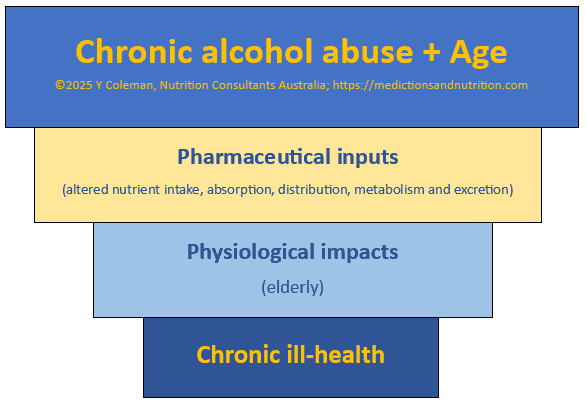
Chronic alcohol abuse and age contribute to Mr APD's complex medical history.
The report refers to the drug-nutrient, drug-food, and PharmacoNutrition effects only.
PharmacoNutrition data
Medical History with Nutritional Aspect
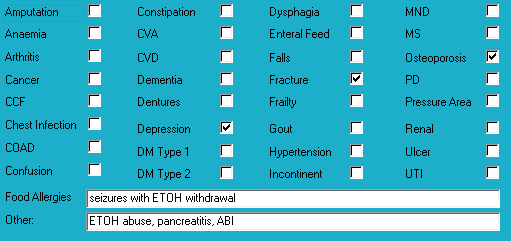
Biochemistry with PharmacoNutrition Consequences

Prescribed medications side effects - biochemistry
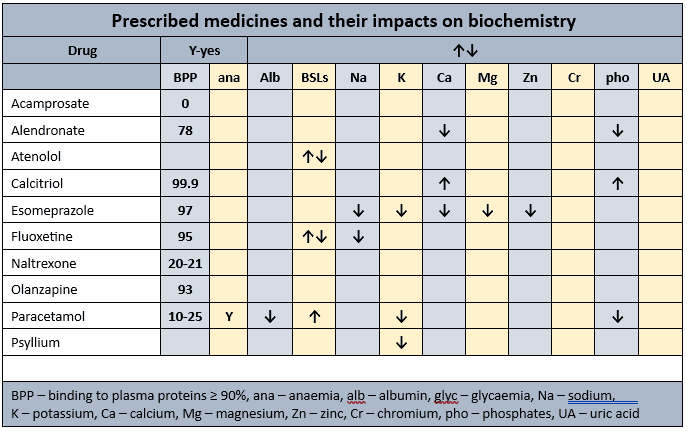
Side effects profile for prescribed medications side effects profile
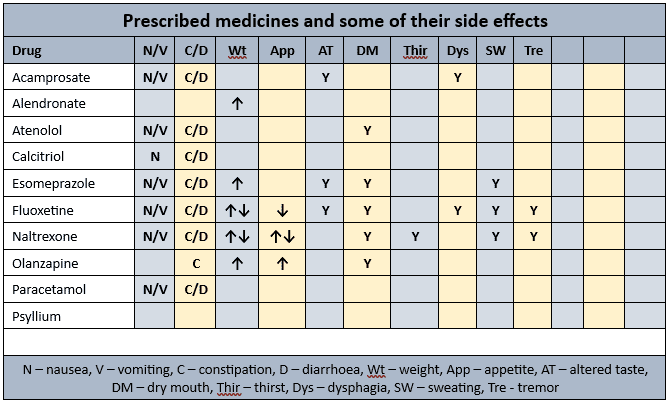
Prescribed medications affected nutrients profile
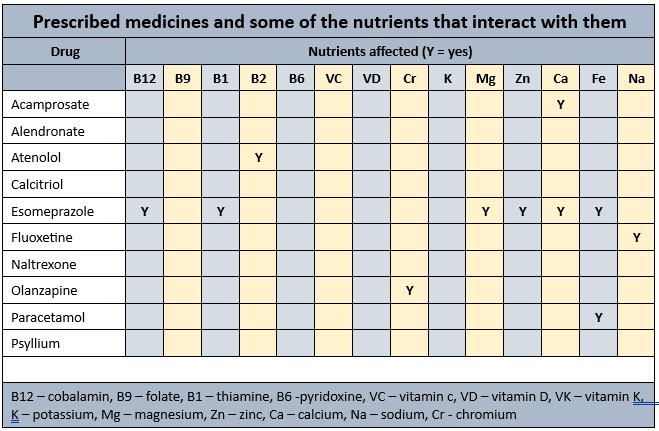
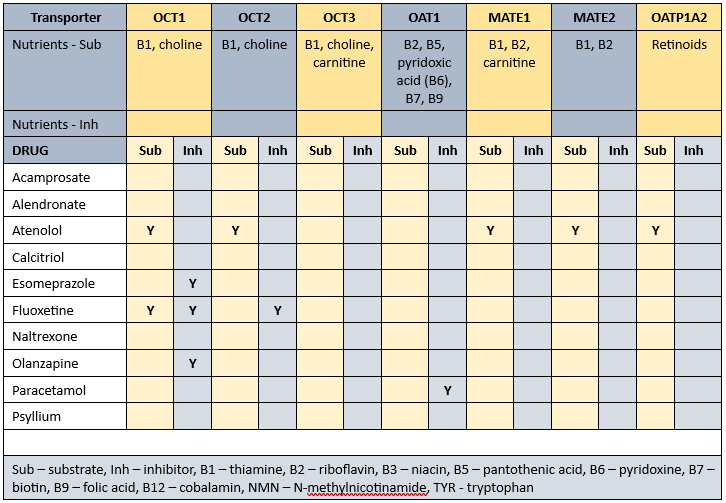
Transporter-mediated interactions and nutrients matrix
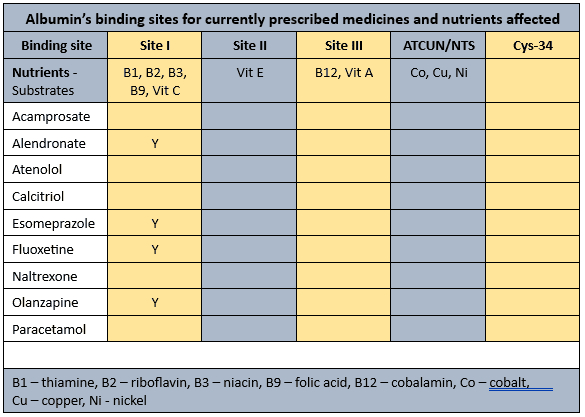
Albumin-mediated interactions and nutrients matrix
Biochemistry
Recent relevant biochemistry indicates no apparent direct impacts on nutrient levels
Glycaemia
Currently prescribed 3 medications that alter glycaemia.
PharmacoNutrition
Alendronate requires adequate intake of calcium and vitamin D to be effective. Calcitriol is prescribed and a calcium intervention is not prescribed.
Administration of alendronate with coffee or orange juice reduces availability of drug by ~ 60%.
Regular monitoring of calcium levels recommended during calcitriol stabilisation.
Esomeprazole decreases B12, vitamin C, magnesium, zinc, iron and thiamine levels and may decrease calcium absorption.
Regular monitoring sodium levels recommended whilst fluoxetine prescribed.
Early evidence indicates olanzapine both decreases chromium accumulation and increases chromium excretion.
Concurrent ingestion of paracetamol and iron increases rate of iron absorption and decreases extent of paracetamol absorption. Consequently, the authors advise paracetamol and iron be administered at different times from each other.
Distribution
Membrane transporters
Some of the identified transporters alter the absorption and/or organ and cellular uptake of a range of nutrients. Inhibition of transporters means blood test results may be unreliable. To clarify nutrient status advisable to conduct blood tests at least one hour before administration of relevant prescribed medicines. A concurrent detailed Diet History is also essential to corroborate adequacy of intake of all affected nutrients. Further, all affected nutrients to be monitored on a regular basis ie at least annually.
Substrate nutrients affected by Mr ADP’s prescribed medications include - thiamine, riboflavin, pantothenate, pyridoxine, biotin, folate, choline, carnitine, retinoids.
Albumin
Nutrients likely to be directly displaced by Mr ADP’s albumin-carrying prescribed medications include - B1, B2, B3, B9, Vit C.
Bowel management
Regular intervention prescribed.
Oral PRN aperients prescribed.
No Nurse Initiated interventions administered.
Staff comments
Staff advise Mr APD is now eating well.
Observations
Mr APD is a well-built man who was dozing on his bed when I went to speak to him. He stirred to his name and told me he eats well, the food tastes fine, and that he sometimes feels upset in the tummy. He looks much better than last time I saw him - and agreed he feels much better.
Mr APD is currently weight stable.
PharmacoNutrition comments
Glycaemia
Mr APD is currently prescribed 3 medications that alter glycaemia. If his glycaemic status destabilizes then advisable to question and address drug impact before initiating diabetes-management interventions.
PPI prescription
Mr APD has been prescribed a proton pump inhibitor for 5 years. The evidence is increasing that long-term (3+ years) proton pump inhibitor prescription is associated with -
- increased risk of food sensitivities at a level of peanut allergy, due to partial protein digestion;
- increased risk of coeliac disease due to partial protein digestion;
- altered gut microbiome;
- increased risk of scurvy;
- generalised malnutrition due to impaired absorption of nutrients such as B12, vitamin C, magnesium, zinc, iron, etc;
- altered gastric pH which reduces absorption dynamics of a range of drugs and nutrients. Altered drug availability is relatively easily identified whilst altered nutrient availability is rarely identified due to the non-specific nature of their signs and symptoms.
Consequently, advisable to review current proton pump inhibitor prescription and consider whether -
- a proton pump inhibitor prescription is still required;
- suppression of gastric acidity is still required.
Bone health
Mr APDs diagnoses include fractures ie impaired bone health. Nutritional factors to consider monitoring include -
Cobalamin (B12) – is important in osteoblast activity, and bone strength. Currently prescribed esomeprazole therefore advisable to monitor status on a regular basis;
Vitamin C – is important in collagen formation, osteoblast synthesis, osteoclast suppression, reducing oxidative stress, regenerating vitamin E. Increasing intake is associated with increased bone density. Currently prescribed esomeprazole therefore advisable to monitor status on a regular basis;
Calcium – is important in skeletal development and growth, and bone mineralization. Currently prescribed acamprosate and esomeprazole therefore advisable to monitor intake and status on a regular basis;
Magnesium – is important in bone formation and mineralization, calcium homeostasis, osteoclastic and osteoblastic activity, and skeletal fragility. Currently prescribed esomeprazole therefore advisable to monitor status on a regular basis;
Zinc – is important as a cofactor for many metalloproteins involved in bone development. Currently prescribed esomeprazole therefore advisable to monitor status on a regular basis.
Alcohol impacts
Mr APD’s diagnoses include alcohol abuse. Nutrients compromised by excessive alcohol intake include thiamine and magnesium. Further esomeprazole decreases availability of both thiamine and magnesium. Adequate availability of magnesium is essential for activation of thiamine, therefore advisable to monitor magnesium status. Advisable to clarify thiamine status and if low or marginal then intervention recommended. Intervention to be administered at a time that is not compromised by either esomeprazole impact or impaired distribution system.
What else would you include?
Please read this as it is important …
The information in this article is provided to support Health Professionals. It is not an exhaustive protocol and Health Professionals are advised that adequate professional supervision is accessed to ensure that Duty of Care obligations with respect to safe administration of medicines is met for each consumer.